
Code red of climate change crisis
โพสต์เมื่อ : 7 เม.ย 2565 เวลา 4:4 น.
Written by Mr. Poonsit Wongthawatchai, Executive Vice President, Head of Environmental, Social, and Governance Division, Bank of Ayudhya Public Company Limited

Code red of climate change crisis
Mr. Poonsit Wongthawatchai, Executive Vice President,
Head of Environmental, Social, and Governance Division,
Bank of Ayudhya Public Company Limited
The world has been confronting with threats that have had a significant influence on human life over the last two years. In addition to the severe and prolonged coronavirus pandemic, this year is also seen as a make-or-break year for world leaders who must decide how and in what degree they would boost efforts to fight against the global climate emergency. The global temperature has risen due to human activities over the last decade, causing extreme human-induced weather disasters in many areas, including escalating wildfires across 2.8 million acres of Siberia, flooding caused by the worst heavy rain in a millennium in Henan Province - China, heavy rainfall in European countries that have killed thousands, as well as changes in ocean temperature and acidity. According to a United Nations research, there is a strong likelihood that the globe is heading for irreversible climate change.The United Nations’ Intergovernmental Panel on Climate Change (IPCC) highlighted the issue in its most recent report, saying that the global climate crisis has reached ‘red alert’ status, indicating that the global average temperature is expected to hit the warming threshold of 1.5 degrees Celsius above pre-industrial levels by 2030. This is the limit that has been established since the COP21 meeting, also known as the Paris Agreement, in Paris, France, six years ago. If this is true, the temperature will rise 10 years faster than originally predicted.
It is generally understood why the globe has followed this road to catastrophe. However, the question of whether we still have a viable remedy remains unanswered. Looking at related figures, it seems that preventing the world temperature from increasing above the 1.5 degree Celsius limit in the next 20 years is nearly unachievable, given that the current global temperature has heightened to 1.2 degrees Celsius above pre-industrial levels.
It is generally understood why the globe has followed this road to catastrophe. However, the question of whether we still have a viable remedy remains unanswered. Looking at related figures, it seems that preventing the world temperature from increasing above the 1.5 degree Celsius limit in the next 20 years is nearly unachievable, given that the current global temperature has heightened to 1.2 degrees Celsius above pre-industrial levels.

However, there was still a glimmer of hope at the end of the tunnel. Over eight years of research, more than 200 scientists from 65 nations contributed to the IPCC report and identified a solution. In short, it gave a guideline that if each country can cut greenhouse gas emissions as much as possible beginning today in a continuous manner, we will be able to slow the global temperature rise over 1.5 degrees Celsius not just in the next 20 years, but even until 2050, or the following 30 years. This will necessitate a significant transition from the use of fossil fuel energy to a rapid change in all aspects of society such as supporting the production of and investment in renewable energy, shifting the mode of transportation to electric engines, reducing financial support to the coal industry, reducing forest destruction, and changing human behavior, all of which will lead to a possible world transition and have a positive impact on humans and the natural ecosystem in a sustainable way.
To achieve these goals, the governmental, private, and public sectors must work together as the driving force in the battle against climate change. As a result, there was a strong expectation from the international community on leaders from 196 countries around the world who attended the COP26, the United Nations Climate Summit held in November in Glasgow, Scotland, whether they would join forces to cause a slowing in time for global average temperatures to reach a predetermined limit. It must be now or never, as it may be too late to restore the world's climate to be the same again.
To achieve these goals, the governmental, private, and public sectors must work together as the driving force in the battle against climate change. As a result, there was a strong expectation from the international community on leaders from 196 countries around the world who attended the COP26, the United Nations Climate Summit held in November in Glasgow, Scotland, whether they would join forces to cause a slowing in time for global average temperatures to reach a predetermined limit. It must be now or never, as it may be too late to restore the world's climate to be the same again.
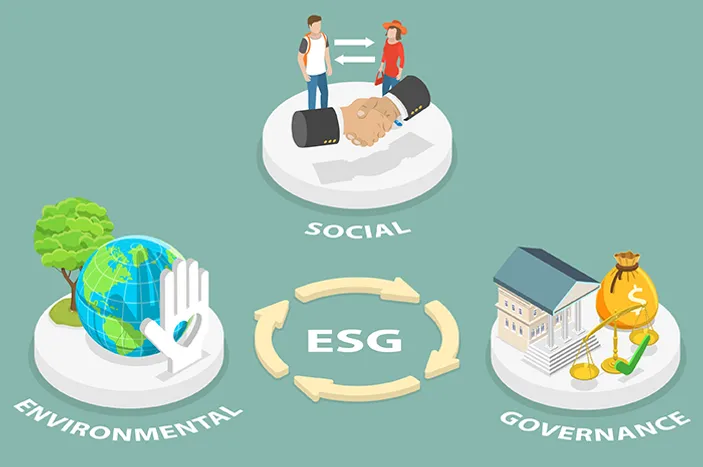
The Thai banking sector, which plays an important role in allocating financial resources to the national economy, is directly involved in this global struggle by supporting developments aimed at reducing greenhouse gas emissions to accelerate the low carbon transition through responsible credits, climate finance, which uses the epidemic crisis as an opportunity to ‘build back greener’. Fostering such a transition not only has a financial or reputational payoff, but it also ensures that climate change is appropriately managed from the start. At the same time, it has the potential to produce long-term sustainability for future generations in terms of the economy, society, and environment.