Due to the global energy crisis in the 1970s, many countries started to become aware of challenging consequences with regard to excess energy production and demand, for example, the depletion of energy resources and air pollution emissions from electricity generation. Demand-Side Management (DSM) which is a concept that attempts to promote and accelerate energy efficiency has been developed to be the practical implementation aiming to solve the mentioned issues. To define DSM clearly and briefly, DSM is a well-designed group of activities (or programs) that is expectedly capable of managing and optimizing the energy consumption profile to enhance overall energy consumption without affecting the way people live, as well as satisfaction.
For the electricity industry, DSM is generally a specific tool that is applied for the purpose of avoiding or delaying power plant construction with a preferable cost. Furthermore, whenever the power generation system has to experience limitations or urgent issues, DSM is introduced in order to ensure the capability of the power system (to avoid brownouts) and to serve the expected growing electricity demand in the future. Not only beneficial for the allocation of energy resources, but DSM also broadly provides solutions for negative environmental impact and climate change. In terms of economy, this tool is also able to reduce social costs in order to increase national economic competitiveness.
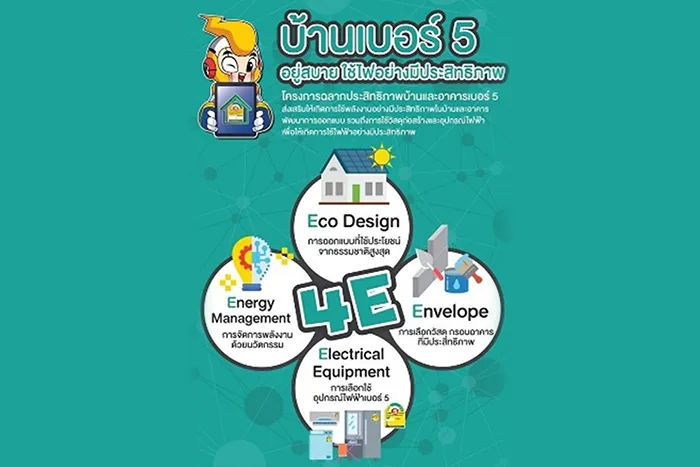
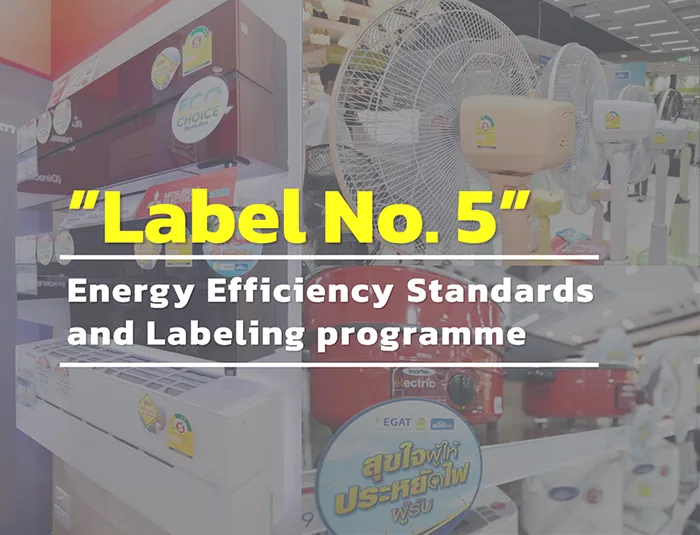
Aside from being responsible for the electric power generation and transmission for 27 years, Electricity Generating Authority of Thailand (EGAT) has also carried out activities in demand side management to improve overall energy efficiency in all sectors under the 3E strategies, namely E1 - Energy Saving Equipment, E2 - Energy Saving Building and E3 - Energy Saving Habit. As of 2021, with great support and collaboration from partners and stakeholders, EGAT has achieved an energy savings of 33,626 million units of electricity (Gigawatt-hour: GWh) and avoided carbon dioxide (CO2) emissions from electricity generation 18.704 million tons of CO2 equivalent.